

Blogs · Essay
the absolute value of now

ai, mathematics, and the distance to the next question.
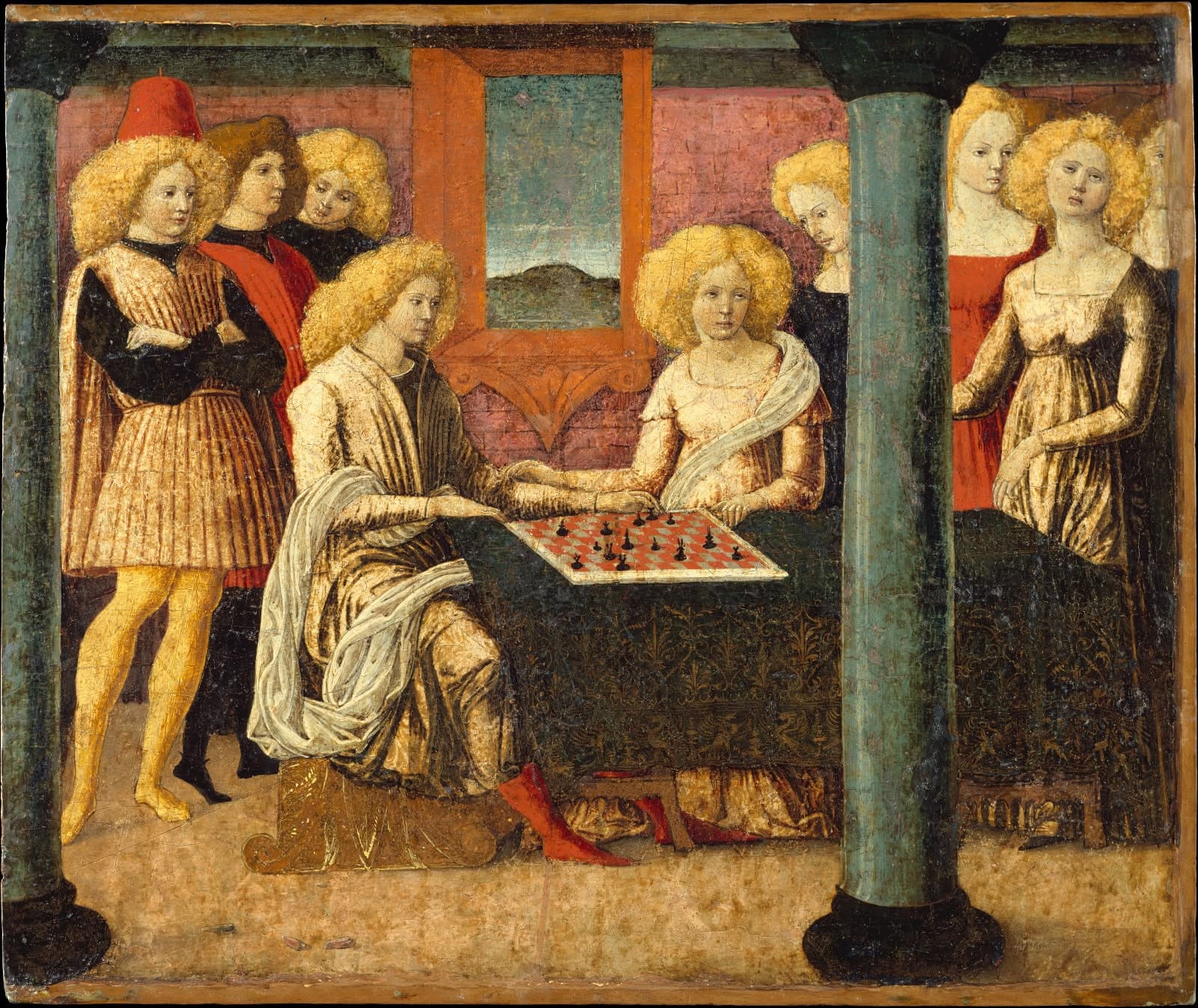
improvements in transport changed how much of a life a journey asks for. a distant city could become somewhere to attend a lecture, work with a collaborator, or even spend a few days pursuing a frivolous curiosity. as the time required to get there fell, people could realistically entertain plans that the journey alone would once have ruled out. more destinations became available to the same person within the same lifetime.
ai could change intellectual distance in a similar way.
a mathematician may already have a promising direction in mind, with the route blocked by a missing lemma or a conjecture whose resolution could take years.
the work beyond it remains imaginable, even while the time needed to reach it makes pursuing it difficult to justify.
shorten that crossing, and something that might have consumed the project, or been the entire project in and of itself, becomes the point from which it begins.
a conjecture away
in may 2026, OpenAI published an internal model’s disproof of a longstanding conjecture about the unit-distance problem: how many pairs among a collection of points in the plane can sit exactly one unit apart? letting u(n) denote the maximum number of such pairs among n points, Erdős’s conjecture predicted:

the extra term in the exponent tends toward zero as the number of points grows. the model instead constructed arrangements establishing, for infinitely many n,
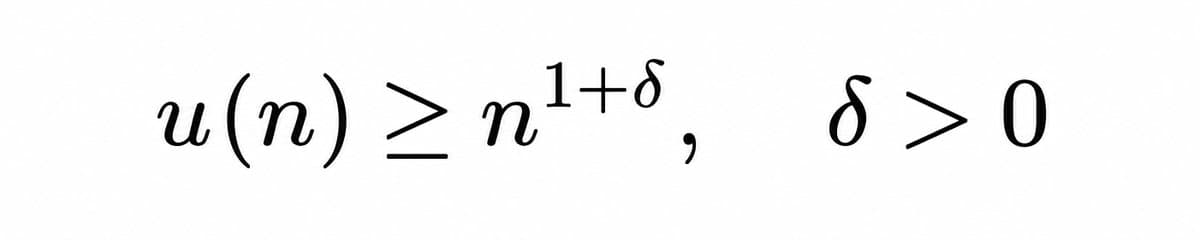
where delta is fixed: an extra power that stays positive, rather than a whisker in the exponent that shrinks away. the argument used ideas from algebraic number theory, and external mathematicians checked it and supplied a companion explanation. the conjecture had fallen, while the exact maximum remained undetermined.
Thomas Bloom, Will Sawin, Carl Schildkraut, and Dmitrii Zhelezov subsequently disproved the sum-product conjecture for real numbers, crediting the unit-distance result with prompting them to revisit an approach. roughly, the conjecture expected that taking all pairwise sums or all pairwise products of a finite set would make at least one of the resulting sets grow almost quadratically. they constructed sets of real numbers for which neither grew that much. their counterexample does not settle the version over integers.
the authors are clear about the work: the final proof and its main ideas were almost entirely human-generated, with a model used early as a sounding board suggesting one useful lemma.
an ai result had in essence become an invitation. its value ran past the question it answered because other researchers could see a method worth carrying elsewhere.
proof of passage
on october 6th, OpenAI released a broader collection of mathematical manuscripts from an internal frontier model, at different stages of verification and with Lean formalizations accompanying many of them. the accompanying announcement also committed support for workshops and other programs devoted to understanding major ai-produced results. producing the manuscripts had created further work in explanation and interpretation.
a formalization lets a proof checker verify that a statement follows from specified definitions and assumptions. someone still has to establish that the formal statement expresses the intended mathematics, and investigate what the result makes possible. however, checking an argument and understanding its significance remain different tasks.
arriving with a proof need not mean finishing the problem, either. in 2025, Google DeepMind’s AlphaEvolve found a configuration of 593 equal outer spheres touching a central sphere of the same size, without overlapping, in eleven dimensions. that improved the known lower bound at the time and left the exact optimum open. so essentially, a construction had extended the map; other researchers could examine the territory it revealed.
once a result is secure enough to build upon, researchers can question its assumptions, simplify its proof, adapt its construction, or follow its consequences elsewhere.
an answer can close one investigation and render several others possible.
an answer can close one investigation and render several others possible.
future work no more
calculators have their own small place in this history. in 1986, some mathematics teachers picketed a conference over proposals to introduce them throughout school mathematics, worried that children would become dependent before mastering arithmetic. supporters argued that reducing time spent on routine calculation could leave more time for solving problems. the disagreement concerned when and how to use the machines, with the National Council of Teachers of Mathematics itself advocating their integration.
a calculator and an ai-generated proof place different demands on whoever checks their output, so the parallel has limits. still, for someone who already understands the arithmetic, completing it faster can leave room to compare more cases and test other approaches or simply just follow the question that made the calculation worth doing.
finding a proof can teach things that receiving one will not automatically teach. the failed attempt leaves a feel for the ground, and reconstructing a difficult argument can make its assumptions visible. faster assistance can leave room for that work: a researcher might spend the time gained studying a generated lemma or finding out how far its method travels.
imagine an estimate that would otherwise have consumed the project. if it can be established and checked sooner, the applications that would have lived in the last paragraph under “future work” might be attempted by the same person, in the years they actually have. another researcher might choose a more ambitious journey because its preliminary questions have become affordable to investigate. perhaps that is the absolute value of now: more starting points inside the time we possess. a result that arrives while someone can still use it changes what they get to attempt, and what the next person inherits.
some research is no longer a mirage.
we can now start playing with the water.